The 10 Best Desktop Pc Offers in UK - September 2026


- THE SLIM, RELIABLE DESKTOP PC FOR HOME PRODUCTIVITY: HP OmniDesk Slim Desktop helps easily manage daily tasks, from organizing family photos to streaming shows and managing budgets. This slim and reliable desktop PC features the latest Intel Processors, ample memory for fast data transfers, the latest easy-access ports and fast, reliable Wi-Fi technology.
- EFFORTLESS TECH FOR AT-HOME PRODUCTIVITY: Enjoy effortless at-home productivity with the Intel Processor, fast data transfers and easy access ports.
- SLIM BUILD, MORE SPACE: With its slim design, the HP OmniDesk Slim Desktop blends into any interior while freeing up space.
- SEAMLESS CONNECTIVITY FOR MULTI-DEVICE HOMES: Connect easily with the latest ports and enjoy reliable Wi-Fi 6 technology for seamless online experiences.
- INTEL CORE I5: The performance you need to connect and learn. Intel Core performance and graphics help you navigate and collaborate confidently. Enjoy an immersive experience with Intel Core high quality processors.
- EPEAT GOLD WITH CLIMATE+: With EPEAT Gold with Climate+, you're choosing a movement towards responsibility and climate action.
- ENERGY STAR CERTIFIED: Save energy and money with ENERGY STAR, certified by the EPA so you will use less energy and save money where it counts most.
- DESIGN CONTAINS RECYCLED METALS AND POST-CONSUMER RECYCLED PLASTICS: Built for a better tomorrow. Designed using recycled metals and postconsumer recycled plastics to reduce environmental impact and promote super energy efficiency.
- UP TO 180 W 80 PLUS GOLD CERTIFIED POWER SUPPLY: Easily power all your high-performance hardware.
- EFFORTLESSLY CONNECTED: Enjoy faster speeds, improved performance and greater capacity with Wi-Fi 6 and Bluetooth 5.4 wireless card.

- FAR-FIELD DRIVERS AND PASSIVE RADIATORS | Custom-tuned far-field driver solution with rear facing passive radiators for excellent audio and enhanced bass reproduction
- 45° ELEVATED DRIVERS | For enhanced audio projection and an immersive personal listening experience
- MODERN AND STYLISH AESTHETICS | Perfect for any modern homes, offices and workspaces.
- EASY ACCESS VOLUME CONTROL | Conveniently placed front-facing controls for instant adjustments
- International products have separate terms, are sold from abroad and may differ from local products, including fit, age ratings, and language of product, labeling or instructions.

- ✅【Advanced Intel i7 processor】This all-in-one computer features a powerful integrated quad-core Intel i7-4785t processor with a 2 GHz CPU and dynamic acceleration up to 3 GHz, 8 GB DDR3 RAM and a 512 GB SSD memory system, 4-core and 8-core thread count and up to 8 GB Level 3 cache for fast work.
- ✅【Multifunctional all-in-one PC】Webcam detachable 270-degree adjustable streaming + built-in recording microphone for live video chat and business meetings and online courses. The camera also supports 30-degree up and down adjustment and comes with a camera on/off valve, which is ideal for keeping your privacy safe when not using this all-in-one pc. Built-in audio speakers for audio streaming and music playback.
- ✅【Universal Portable desktop PC】 This all-in-one computer includes a variety of ports, including 6*USB ports for fast file and image import,1*HDMI port,1*VGA port, 1*Gigabit Ethernet port,1*audio input port,1*audio output port, power input port. Note: Card reader ports are not available for this all-in-onedesktop pc.
- ✅【Powerful wireless connectivity】Dual-band Wi-Fi technology supports fast data transmission at 2.4 GHz and the latest generation at 5 GHz, giving you an efficient and stable network. Bluetooth wireless technology allows you to connect a variety of Bluetooth devices such as mouse, keyboard, headphones, speakers to this all-in-one PC.
- ✅【One Stop Shopping】 Package List: All-in-one desktop PC x 1, Keyboard x 1, Mouse x 1, User Manual x 1, Power Adapter x 1, Power Cord x 1, Detachable Camera x 1.

- USB-powered (5V) speakers plug directly into your computer for portable convenience
- Turn the speakers on and adjust the volume using one simple control (located on the front of the speakers); volume control includes On/Standby
- Simple plug-and-play setup (no drivers needed); can be used with headphones via the 3.5mm jack connector
- Frequency range of 103 Hz - 20 KHz; 2.2 watts of total RMS power (1.1 watts per speaker)
- Measures 8.1 by 7.1 by 13.4 cm (LxWxH); weighs approximately 0.6 Kg;

- High-performance USB-powered (5V) computer speakers with bottom radiator for “springy” bass sound
- Simple plug-and-play setup (no drivers needed); in-line volume control for easily adjusting the volume
- Brushed black metal finish and blue LED accent lights for sleek, modern style; padded base for scratch-free placement and stability
- Frequency range of 80 Hz - 20 KHz; 2.4 watts of total RMS power (1.2 watts per speaker)
- Measures 9.9 by 6.6 by 7.1 cm (LxWxH); weighs approximately 0.63 kg

- INTEL CORE i3-14100 PROCESSOR - Experience fast, efficient performance with Intel's latest 14th Generation Core i3 processor, designed for smooth multitasking, office productivity, and everyday business applications.
- 8GB DDR5 RAM & 512GB SSD - Enjoy responsive performance with high-speed DDR5 memory and a fast 512GB solid-state drive, delivering quick boot times, rapid file access, and smooth multitasking.
- WINDOWS 11 PRO - Stay productive and secure with Microsoft's latest business operating system, featuring BitLocker encryption, Remote Desktop support, enhanced security features, and seamless Microsoft 365 integration.
- MOUSE & KEYBOARD INCLUDED - Supplied with a matching Dell mouse and keyboard, providing everything you need to get your workstation set up and start working straight out of the box.
- COMPACT BUSINESS DESIGN - A space-saving desktop chassis that fits neatly into offices, reception areas, educational environments, and home workspaces while delivering reliable day-to-day performance.
- 3 YEAR DELL ON-SITE WARRANTY - Buy with confidence knowing your desktop is backed by Dell's comprehensive 3-year on-site warranty, providing fast professional support and complete peace of mind.
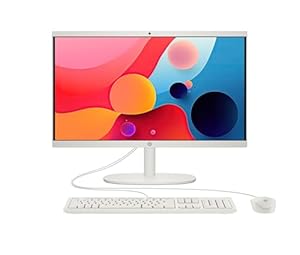
- A POWERFUL, RELIABLE ALL-IN-ONE DESKTOP PC FOR EVERYONE: Meet the HP 21.45" All-in-One Desktop PC - your reliable and affordable everyday computing partner. Shop, stream, and connect confidently, with dependable technology, next-level power, and rock-solid performance. Enjoy a stunning display, crisp audio, and sleek design, at an exceptional value. Take on today with tech built for tomorrow.
- POWER YOUR MODERN HOUSEHOLD: Multitask with ease thanks to fast processing power, tons of ports, and ample storage for photos and videos.
- BE SEEN, BE HEARD, ON YOUR TERMS: Stand out with advanced video and AI-noise reduction, plus control your privacy with a manual camera shutter.
- CHILL OUT WITH IMMERSIVE ENTERTAINMENT EXPERIENCE: Relax with FHD visuals on a wide screen, with vibrant colours, high contrast, and speakers tuned by DTS Audio.
- GET A FRESH PERSPECTIVE: From a rejuvenated Start menu, to new ways to connect to your favourite people, news, games, and content - Windows 11 is the place to think, express, and create in a natural way.
- INTEL PROCESSOR: Get the performance and graphics you need with an Intel processor at the affordability you want to connect, learn, and play anywhere.
- INTEL UHD GRAPHICS: Smoothly stream 4K content and play your favourite games in 720p, without the need for a dedicated graphics card. With excellent Intel UHD graphics performance, you'll see the difference in everything you do.
- FULL HD DISPLAY: Sit back and enjoy crystal-clear visuals and images with the vibrant quality of 2 million pixels. The 1920 x 1080 resolution gives all your digital content a new dimension.
- ANTI-GLARE PANEL: Enjoy the sun and your favourite content with this anti-glare panel. Non-reflective and low gloss means you'll get less glare while you're outside.

- The original keyboard is American style and comes with different stickers for different keyboard layouts. These stickers include the layouts French (Azerty), German (QWERTZ), Spanish and Italian.
- Processor This Dell Optiplex 7050 SFF desktop PC is equipped with Intel Core i7-7700T, a stable processor with an average clock frequency of 2.9GHz to 3.8GHz, 4 cores and 8 threads.
- Sufficient Storage Space This Dell Optiplex 7050 SFF PC is equipped with 16GB RAM and a 512GB SSD. So you can easily run multiple programs and browsers at the same time and have plenty of storage space to download files.
- Extensive interfaces and advanced accessories: The refurbished Dell Optiplex 7050 SFF desktop computer has numerous ports to meet the needs of any workplace scenario.
- Stable Operating System: Windows 11 Pro is installed on this refurbished desktop computer. It provides additional security features and options to improve the security of your personal and business data. It supports multiple languages, including English, French, Spanish and German.

- PC Specs: Equipped with a Intel Core i7 4770 processor (renewed), 16GB DDR3 RAM, and a blazingly quick 256GB M.2 SSD, this pc delivers exceptional speed and power for seamless multitasking and efficient data storage. Pre-installed with Windows 11, this computer ensures you have access to the latest and most advanced software features. Experience the enhanced productivity, seamless multitasking, and cutting-edge security protocols offered by Windows 11
- Casing: Cutting-Edge Design and Efficient Cooling - Introducing the Brand New V100 Office case by VenoScorp, a sleek and modern solution that combines a visually appealing design with exceptional cooling capabilities. This case is engineered to provide the perfect balance between style and performance, ensuring your components stay cool even during intense workloads.
- Bundle: 1 x Computer , 1 x Wifi Adapter, 1 X Power Cable
- Item Condition: This computer comes with brand-new components, ensuring top-notch performance and reliability. The case itself is brand new and sealed, with no marks or signs of wear. From the outside, the system will appear pristine and brand new. Pc will be sent in Original Brand New Packaging. Inside, you will find a Brand New Motherboard, Ram, PSU, and a renewed CPU.
- Warranty: Peace of Mind with 1 Year Return to Base Warranty - This full bundle comes with the added assurance of a 1 Year Return to Base Warranty. We stand behind the quality and performance of this bundle, and in the unlikely event of any issues, we offer hassle-free warranty coverage. With the Return to Base Warranty. Our dedicated support team is committed to providing prompt and reliable assistance to ensure your satisfaction.

- High-level business performance Refurbished desktop PC with Intel Core i7 8700 (8 threads), 16GB DDR4 RAM and high-performance 512GB SSD. Ideal for advanced office, intensive multitasking, management software, accounting, lightweight graphics and daily professional productivity.
- Fast, Instant Responsiveness With the new 512GB SSD and Windows 11 Pro installed and ready to use, the system ensures fast start, smooth loads, and maximum operating stability right from the first use.
- New and Certified Components Brand device professionally refurbished with HDD/SSD, RAM and CPU verified and replaced where necessary, subjected to rigorous technical controls to ensure reliability as new.
- Complete and Professional Connectivity Equipped with 4 USB 2.0, 2 USB 3.2 Gen1 Type-A, 2 USB 3.2 Gen2 Type-A, 1 USB-C, 2 DisplayPort, VGA, Gigabit LAN 10/100/1000, Wi-Fi via USB stick included. Perfect for multi-monitor workstations and structured business environments.
- Compact and solid design Small Form Factor (92.5×290.5×343.5mm – 6kg): powerful yet space-saving, ideal for modern offices, professional studios and operating desks.
- 🛡️ 3 Year Warranty - Computers Parts Gold Partner Lenovo Product comes with 3 year official commercial warranty, managed directly by Computers Parts - Lenovo Gold Partner, for a safe, professional and worry-free purchase.
- Eco-sustainable, smart choice Choosing a refurbished ThinkCentre means reducing your environmental impact without sacrificing high performance and business reliability.
Compare Desktop Pc and find the most suitable offer.
A desktop PC, short for Personal Computer, is a versatile computing device that is primarily designed for use at a fixed location, such as a desk or a table. It consists of several hardware components, including a computer case, a power supply unit, a motherboard, a central processing unit (CPU), memory modules, storage devices (such as a hard drive or solid-state drive), a graphics card, and various input/output devices (such as a keyboard, mouse, and monitor). These components work together to provide users with a powerful and reliable computing experience.
One of the primary advantages of a desktop PC is its flexibility and upgradability. Unlike laptops or mobile devices, desktop PCs allow users to easily swap out or upgrade individual components as needed. This flexibility enables individuals to customize their machines according to their specific requirements, whether it be for gaming, graphic design, programming, or other demanding tasks. Another advantage is the potential for increased performance and power. Desktop PCs often have more powerful CPUs and graphics cards than their portable counterparts, allowing for faster processing and superior graphics rendering.
Desktop PCs are commonly used in various settings, including homes, offices, educational institutions, and gaming communities. They can run operating systems like Windows, macOS, or Linux, offering users a wide range of software options to choose from. Furthermore, desktop PCs offer ample storage space for files, programs, and multimedia content, making them suitable for tasks that require high storage capacity, such as video editing or data analysis.
Many people prefer desktop PCs for their reliability and durability. They are typically designed with better cooling systems, which minimize the risk of overheating and ensure better overall performance. Additionally, desktop PCs often have larger screens and more comfortable keyboards, offering improved user experience, especially when working on complex projects or for extended periods of time.
In conclusion, desktop PCs are powerful and versatile computing devices that can be customized according to specific needs. They offer superior performance, upgradability, and reliability compared to laptops or mobile devices. With their wide range of capabilities, desktop PCs are widely used in various settings and cater to different user requirements, making them an essential tool for individuals and organizations alike.
** "Free Delivery" means that this is possible under the given conditions at the time of data retrieval from the relevant provider, but cannot be guaranteed. It is technically not possible to provide information in real-time. The shipping costs may vary under certain circumstances (different provider, place of delivery, etc.). The shipping costs shown in the further ordering process apply.
Other IMPORTANT INFORMATION that we ask you to take note of:
We may receive a commission if you make a purchase via the links on our site. This has no impact on the placement of the products on our site. Our website is part of amazon associates program - Amazon, Amazon Prime, the Amazon Logo and Amazon Prime Logo are registered trademarks of Amazon, Inc. or its affiliates.
Disclaimer:
1. The prices shown may have risen since the time we last updated them.
2. The actual price of the product on the seller’s site at the time of purchase will govern the sale.
3. It is not technically possible for the prices displayed above to be updated in real-time.
What are the minimum system requirements for a desktop computer?
A desktop computer is an essential tool for both personal and professional use. However, purchasing one may come with some challenges, and one of which is ensuring that it meets the minimum system requirements. It's important to take note of these requirements to avoid purchasing a computer that is already outdated or may not be able to operate certain software or applications.
The minimum system requirements for a desktop computer may vary depending on the intended use, but there are some standard requirements that should be considered. The first requirement is the processor. It is the central processing unit (CPU) responsible for processing data and executing commands. The processor speed and type should be considered, but a minimum requirement would be an Intel Core i3 or AMD A8 processor.
The second requirement is the amount of memory (RAM) that a computer should have. A minimum of 4GB RAM is suitable for basic tasks such as browsing, checking emails, and working on documents. For more demanding tasks such as gaming or video editing, a minimum of 8GB RAM is recommended.
Another important requirement is the graphics card. It is necessary for displaying visual content on the computer's screen. A minimum requirement would be an Intel HD Graphics 4000 or AMD Radeon HD 7000 graphics card. For more demanding tasks such as rendering, a dedicated graphics card with a minimum of 2GB VRAM would be ideal.
Storage is another requirement to be considered. The minimum storage would be a 500GB hard drive, although it may be beneficial to have a solid-state drive (SSD) for faster boot and load times. For those with a lot of files or large applications, a 1TB or higher hard drive would be suitable.
Finally, the operating system (OS) is a crucial requirement for a desktop computer. The most widely used OS for desktops is Microsoft Windows, and the minimum version would be Windows 10. Alternatively, macOS and Linux are also popular options.
In summary, the minimum system requirements for a desktop computer include an Intel Core i3 or AMD A8 processor, 4GB RAM, an Intel HD Graphics 4000 or AMD Radeon HD 7000 graphics card, a 500GB hard drive, and Windows 10 as the operating system. However, it is ideal to choose higher specifications to ensure that the computer can handle more demanding tasks and future updates. It is recommended to consult with a professional or do thorough research before making a purchase to ensure that the device meets the specific requirements needed for its intended use.
How much RAM do I need for my desktop PC?
When it comes to determining how much RAM you need for your desktop PC, the answer can vary depending on your specific needs and usage. However, as a general rule of thumb, 8GB of RAM is considered the minimum for basic computing tasks such as web browsing and running office applications.
If you are a casual gamer or streamer, you may want to consider upgrading to 16GB of RAM. This will allow you to run multiple applications at once without experiencing any lag or performance issues. Additionally, if you frequently work with large files such as high-resolution images or videos, 32GB of RAM may be more suitable for your needs.
It is important to note that other factors such as your CPU and graphics card can also impact system performance, so it is best to ensure that these components are also up to date and capable of handling your intended tasks.
Upgrading your RAM can be a relatively affordable way to boost the performance of your desktop PC. However, it is important to ensure that your motherboard is compatible with the type and amount of RAM you plan to install. Additionally, you may need to adjust your BIOS settings to ensure that your system recognizes the new RAM.
Overall, the amount of RAM you need for your desktop PC will largely depend on your individual needs and intended usage. However, given the increasingly demanding nature of modern applications and software, it can be beneficial to opt for a larger amount of RAM to ensure optimal performance and prevent any issues down the line.
What is the ideal processor speed for a desktop computer?
The ideal processor speed for a desktop computer largely depends on the intended use of the computer. For general use such as web browsing, email, and word processing, a processor speed of 2 to 3 GHz should suffice. However, for more demanding tasks such as gaming or video editing, a faster processor such as 3.5 to 4 GHz or above is recommended.
Aside from the processor speed, other factors such as the number of cores and threads, cache size, and architecture also contribute to the overall performance of a computer. Most modern processors come with multiple cores and threads, which allow for handling multiple tasks simultaneously. The cache size also affects the processor's ability to retrieve frequently used data quickly.
Furthermore, the processor's architecture, whether it is 32-bit or 64-bit, can significantly impact its performance. A 64-bit architecture can address more memory and process more data, making it ideal for heavy multitasking and running memory-intensive applications.
It is also important to consider the price when choosing a processor. While faster processors can provide better performance, they are often more expensive. Therefore, it is crucial to strike a balance between performance and cost.
Lastly, upgrading or replacing a processor can be costly, so it is advisable to future-proof the system by choosing a processor that can handle the latest and most demanding applications. Ultimately, the ideal processor speed for a desktop computer depends on the specific needs and budget of the user.
What type of storage drive is best for a desktop computer?
When it comes to choosing a storage drive for your desktop computer, there are several options to consider. Each type of drive has its own set of advantages and disadvantages, and the right choice ultimately depends on your specific needs and preferences.
One of the most common types of storage drives for desktops is the hard disk drive (HDD). These drives offer a high-capacity storage solution that is relatively affordable and easy to install. However, they are also slower than some other options, and can be prone to mechanical failure over time.
Solid state drives (SSDs) are another popular choice for desktop storage. These drives use flash memory to store data, which makes them much faster than HDDs. They are also more reliable, have lower power consumption, and are generally quieter than HDDs. However, SSDs tend to be more expensive on a per-gigabyte basis than HDDs, and may not offer as much storage capacity.
A third option for desktop storage is the hybrid drive. These drives combine the fast access times and reliability of an SSD with the high storage capacity of an HDD. By storing frequently accessed files on the SSD portion of the drive and less frequently used files on the HDD portion, hybrid drives offer a balance of speed and storage capacity. However, they can still be more expensive than traditional HDDs.
Ultimately, the best type of storage drive for your desktop depends on your specific needs. If you need a high-capacity storage solution, and don't mind sacrificing some speed, an HDD is a good option. If you need faster access times and are willing to pay a premium, an SSD may be the way to go. And if you want a balance of speed and storage capacity, a hybrid drive may be the right choice. Whatever your needs, make sure to consider all the options available before making a decision.
Can I upgrade the components of my desktop PC?
Upgrading the components of your desktop PC is a great way to extend its lifespan and improve its performance. Whether you're a passionate gamer, a graphics designer, or a business professional, you can benefit from upgrading your computer's graphics card, processor, memory, storage, or other components.
One of the most common upgrades you can perform on your desktop PC is to replace its graphics card. This is especially important if you're a gamer or a designer who works with high-resolution or 3D graphics. A powerful graphics card can improve your computer's rendering and processing speed, and allow you to run the latest games and applications with ease.
Another upgrade that can greatly boost your computer's performance is to replace its processor or CPU. This is particularly important if you're using a computer for heavy-duty tasks like video editing, programming, or virtualization. A faster processor can speed up your computer's processing time, improve its multitasking capabilities, and allow it to handle more complex tasks without slowing down.
Upgrading your computer's memory or RAM is also an effective way to increase its speed and performance. With more memory, your computer can run more applications simultaneously, store more data in its cache, and switch between tasks more quickly. This is particularly important if you're a power user who works with large files, complex software, or multiple applications at once.
If you're running out of storage space on your computer, you can also upgrade its hard drive or SSD. A larger hard drive can give you more space to store files, movies, music, and other data, while an SSD can dramatically improve your computer's overall speed and boot time. You can also consider adding an external storage device like a USB drive or an external hard drive to expand your storage space even further.
Finally, you can also upgrade other components of your desktop PC, such as its motherboard, power supply, cooling system, or peripherals like monitors, keyboard, and mouse. Upgrading your motherboard can allow you to add more RAM, PCI cards, or storage drives, while upgrading your power supply can provide more stable and efficient power to your computer's components. Adding a better cooling system can also reduce the risk of overheating and improve your computer's longevity and reliability.
In conclusion, upgrading the components of your desktop PC can greatly enhance its performance, speed, and functionality, and allow you to use it for more advanced and demanding tasks. Whether you're a casual user or a power user, there are many ways to upgrade your computer's graphics card, processor, memory, storage, or other components, and customize it to your specific needs and preferences. With the right upgrades and maintenance, your desktop PC can continue to serve you well for years to come.
Are gaming desktop computers worth the investment?
Gaming desktop computers are popular among gamers due to their superior performance and ability to handle high-end games with ease. While they can be expensive, many people believe they are worth the investment. In this article, we will explore whether gaming desktop computers are worth the investment.
Firstly, gaming desktop computers offer better performance than regular computers. They are designed with advanced technology, which enables them to handle high-end games without any lag. This means that gamers can enjoy their games without any interruptions and have a more immersive gaming experience. Additionally, the graphics quality of gaming computers is higher, which means that the gameplay is smoother and the visual effects are more realistic. As a result, the gaming experience is enhanced, making it more enjoyable.
Secondly, gaming desktop computers are built to last. They are designed to handle heavy usage and can withstand high temperatures, which is essential for gamers who play for extended periods. This means that gaming desktop computers have a longer lifespan than regular computers, which can save gamers money in the long run. Furthermore, they are easy to upgrade, which means that gamers can keep up with the latest technology without having to replace their entire computer.
Thirdly, gaming desktop computers are more versatile than regular computers. They are not only designed for gaming but can also be used for other tasks such as video editing and programming. This means that gamers can use their gaming desktop computers for work and other activities, making it a more practical investment. Additionally, they can connect to multiple monitors, which is useful for multitasking and increasing productivity.
However, there are also some drawbacks to gaming desktop computers. They are more expensive than regular computers, which may not be feasible for some people. Additionally, they are bulky and take up more space, which may not be ideal for people with limited space. Furthermore, they require more maintenance and upkeep, which can be time-consuming and costly.
In conclusion, gaming desktop computers are worth the investment for serious gamers who want to have an immersive gaming experience. They offer better performance, are built to last, and are more versatile than regular computers. They do, however, come with a higher price tag, take up more space, and require more maintenance. Ultimately, it depends on the individual's needs and preferences, but for serious gamers, a gaming desktop computer is a smart investment.
How do I clean the inside of my desktop computer?
Cleaning the inside of your desktop computer is important for ensuring its longevity and performance. Over time, dust and debris can accumulate inside your computer, causing it to overheat and potentially damage its components. In this article, we'll provide a step-by-step guide on how to clean the inside of your desktop computer.
Step 1: Gather the necessary tools and materials. You will need a can of compressed air, a small brush, a microfiber cloth, and a vacuum cleaner.
Step 2: Power off your computer and unplug all the cables and cords. This will ensure your safety during the cleaning process.
Step 3: Open your computer case. This step varies depending on the type of case you have. Most cases have screws that need to be removed before the case can be opened. Refer to your computer's manual if you're unsure how to open the case.
Step 4: Use a can of compressed air to blow out any dust or debris from the inside of your computer. Hold the can upright and in short bursts to avoid damaging any components. Use a brush to remove any stubborn dirt and dust from hard-to-reach nooks and crannies.
Step 5: Use a vacuum cleaner to clean any debris that has fallen to the bottom of your computer case. Be careful not to touch any of the components with the vacuum cleaner as this can cause damage.
Step 6: Use a microfiber cloth to wipe down any surfaces inside the case that are oily or covered in grime. This includes the case fans, heatsinks and the power supply.
Following these six simple steps will help keep your computer running smoothly and prevent any damage due to dust and debris. It is important to clean your computer every six months to a year, depending on how much dust and debris it is exposed to. By taking the time to clean your computer, you will extend its lifespan and save yourself the hassle of future repairs.
How do I connect my desktop computer to a monitor?
Connecting your desktop computer to a monitor is a simple process that can be accomplished in just a few easy steps. If you're unsure of how to do it, this guide will show you everything you need to know. Whether you're setting up a new workstation or simply adding a second screen, these instructions will help you get started.
Before you begin, make sure you have all the necessary cables. Most modern displays use HDMI, DisplayPort, or DVI, so you'll need to figure out which type your monitor uses. Once you have the correct cable, you can proceed to connect your computer to the monitor. Simply plug one end of the cable into the appropriate port on your monitor and the other into your computer's video output port.
Next, you'll need to make sure your computer is set up to output video to the monitor. If you're using a Windows PC, go to the display settings by right-clicking on the desktop and selecting "Display settings" from the menu. On a Mac, click the "Apple" menu on the top left of the screen, select "System Preferences," and then click on "Displays." From there, you can select your display settings and choose which monitor(s) to use.
Once you've verified that your computer is configured to display video on your monitor, you should be able to see your desktop and other programs on the display. If everything looks good, congratulations! You've successfully connected your desktop computer to your monitor. If you're having issues getting it to work, double-check your cables and settings to make sure everything is properly configured.
In addition to connecting your computer to a monitor, you may also want to consider adding a second monitor to your setup. Having a dual-screen setup can greatly increase your productivity and make it easier to multitask. To connect a second monitor, you'll need an additional cable and an available port on your computer. Follow the same steps as above to connect the monitor and set up your display settings.
Overall, connecting a desktop computer to a monitor is a straightforward process that can greatly enhance your computing experience. Whether you're using a single screen or a dual-screen setup, following these simple steps can help you get up and running quickly and easily.
What is the best antivirus software for a desktop PC?
When it comes to protecting your desktop PC from viruses and other malware, there are many antivirus software options available on the market. But which one is the best for your needs? In this article, we'll explore some of the top antivirus software options and what sets them apart.
Firstly, there's Norton Antivirus, which is a popular choice due to its reliable protection against all types of malware and phishing attacks. It uses advanced algorithms and machine learning to detect and block threats in real-time, and it also offers a range of additional security features like a VPN and parental controls.
Another top pick is Kaspersky Antivirus, which has consistently ranked high in independent tests for its advanced malware detection capabilities and low false alarm rate. It also offers a range of features like password management and protection for your online transactions.
For those on a budget, Avast Free Antivirus is a solid option that offers basic but effective protection against viruses and other malware. It also includes additional features like a password manager and Wi-Fi security scanner.
Next up is McAfee Antivirus, which is known for its comprehensive security suite that includes features like a firewall, email protection, and anti-spam filters. It's also highly customizable, allowing users to tailor their protection to their specific needs.
Finally, there's Bitdefender Antivirus, which is consistently ranked as one of the top antivirus software options in independent tests. It uses advanced machine learning and behavioral analysis to detect and block malware, and also includes features like a VPN and parental controls.
In conclusion, the best antivirus software for your desktop PC depends on your specific needs and budget. From comprehensive suites to free basic protection, there are many options available that offer reliable protection against viruses and other malware. Do your research, compare features, and choose the one that's right for you.
How do I troubleshoot common desktop computer issues?
Desktop computers are essential tools that are used for various purposes, ranging from entertainment to work-related tasks. Despite the reliability and effectiveness of desktop computers, users may experience some issues from time to time. Knowing how to troubleshoot these common desktop computer issues can be a lifesaver, especially when working on crucial tasks. Here are some tips to help troubleshoot common desktop computer issues:
1. Slow performance: A slow computer can be frustrating and may hinder productivity. To troubleshoot this issue, start by closing any open applications and programs. Also, make sure that your computer has enough space on the hard drive. If that does not solve the problem, consider running a virus scan or check for software updates. In some cases, upgrading the RAM or replacing the hard drive may also improve the computer's performance.
2. Blue screen of death: This is a critical system error that causes the computer to shut down. It is often caused by hardware or software issues. When this happens, try restarting the computer. If the problem persists, try booting the computer in safe mode and run a virus scan or update the drivers. If the issue still persists, seek professional help.
3. Frozen screen: A frozen screen can be due to various issues such as software errors, outdated drivers, or overheating. To troubleshoot, try restarting the computer. If the issue persists, unplug and plug back in any external devices, and make sure that your software is up to date. Also, ensure that the computer is adequately ventilated to prevent overheating.
4. Wi-Fi connectivity issues: A slow or unstable Wi-Fi connection can hinder productivity. First, ensure that your router is in a suitable location and that there are no other devices interfering with the signal. If that does not solve the issue, try rebooting the router. Also, make sure that your computer is not too far from the router.
5. No sound: No sound coming from your desktop computer can be due to a disabled audio device or outdated drivers. Try adjusting sound settings on the computer first. If not successful, make sure that the audio device is enabled in the device manager. If the issue persists, update the audio driver or seek professional help.
6. Application errors: If an application is not responding or keeps crashing, try restarting the computer first. If that does not work, try updating the application, or reinstalling it. Also, make sure that there is enough storage space on your computer.
In conclusion, troubleshooting common desktop computer issues can be done by following the tips given above. However, in some cases, it may be best to seek professional help instead of attempting to fix the issue yourself. With proper maintenance and regular upkeep, desktop computers can run efficiently and effectively for years to come.